
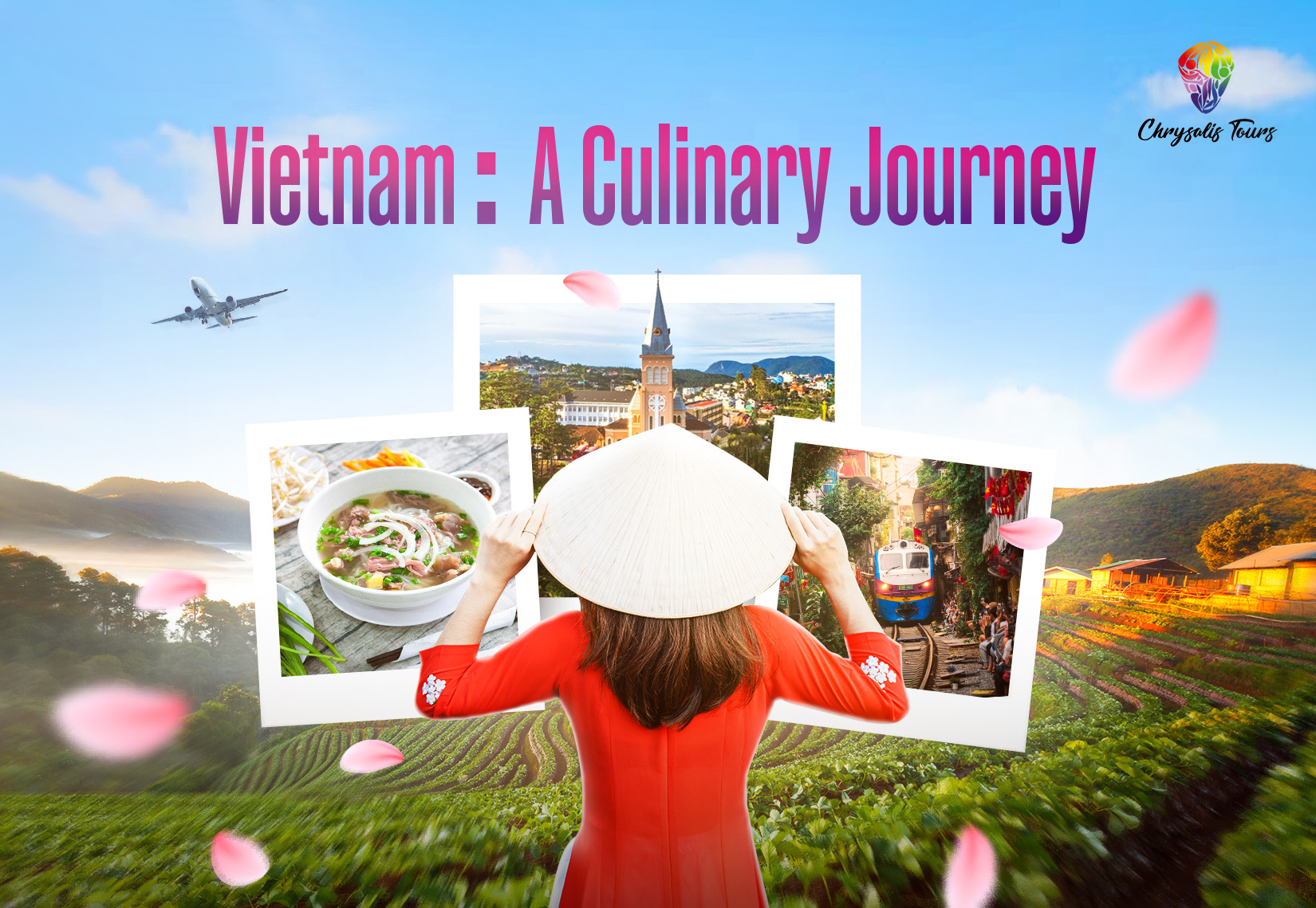

Your travel guide just got a lot tastier. We're taking you on a culinary expedition through Vietnam, where every bite tells a story and every dish is a cultural masterpiece.
Few places in the world can rival Vietnam’s extraordinary bond with food. Here, meals are more than sustenance—they’re a reflection of history, geography, and community. From the steaming bowls of phở found on Hanoi’s bustling streets to the delicate white rose dumplings of Hoi An, Vietnam's cuisine tells a story as rich as the flavours it delivers.
For travellers seeking an immersive and sensory experience, Vietnam is a feast for the soul. This guide explores why Vietnam is unparalleled for food tourism, the must-try dishes every traveller should sample, and the hands-on culinary experiences that connect you to its vibrant food culture.
Vietnam’s Culinary Uniqueness
Vietnam’s cuisine is a mosaic of regional diversity, shaped by its landscape and historical influences. The northern highlands, central coast, and southern delta each bring their own character to the table, creating a tapestry of flavours that represent the heart of the nation.
The Geography of Taste
The geography of Vietnam heavily influences its culinary landscape. The cooler, mountainous north favours hearty, warming dishes, such as phở in Hanoi—its clear, savoury broth echoing the simplicity of the region. Central Vietnam, with its imperial city of Hue, brings bold, spicy flavours often associated with royal recipes. Meanwhile, the southern delta, with its tropical abundance, weaves sweetness and vibrant herbs into its dishes, as seen in gỏi cuốn, fresh spring rolls stuffed with aromatic greens.
A Historical Legacy
Vietnam's cuisine bears the unmistakable marks of its history. French colonisation introduced ingredients like baguettes, pâté, and coffee, blending them seamlessly into Vietnamese favourites like bánh mì and cà phê sữa đá (Vietnamese iced coffee). Chinese influence is evident in noodle dishes and the widespread use of soy-based ingredients, while indigenous traditions give pride of place to fish sauce—a defining staple that ties almost every dish together.
Food in Vietnam is cultural DNA expressed on a plate. It’s the harmony of salty, sweet, sour, and heat—a symphony of flavours designed to ignite your taste buds at every turn.
Must-Try Dishes & Where to Find Them
No trip to Vietnam is complete without savouring its iconic dishes. Each bite introduces you to layers of flavour, texture, and cultural significance. Here are five unmissable Vietnamese culinary gems and where to experience them at their finest.

1. Phở – Hanoi
Few dishes are as synonymous with Vietnam as phở—a simple yet complex noodlesoup traditionally made with beef or chicken. The magic lies in its broth, simmered for hours with bones, star anise, and cinnamon.
Where to Try: Phở Gia Truyền in Hanoi is legendary for its traditional take. Pull up a low plasticstool, order phở tái lăn for seared beef, and listen as locals debate the merits of broth clarity.

2. Cáo Lầu – Hoi An
This regional speciality is a testament to Hoi An’s unique culinary heritage. Thick noodles, inspired by Japanese udon, are paired with pork slices, fresh greens, and crispy croutons—a fusion born out of the town’s trading history.
Where to Try: Wander into the alleys of Hoi An to find family-run stalls like Cao Lầu Thanh, where the noodles are made with water from the town’s ancient wells for an irreplicable taste.

3. Bánh Mì – Saigon
Vietnam’s answer to the sandwich is anything but ordinary. Crispy baguettes cradle layers of pork, pâté, pickled vegetables, and fiery chili sauce.
Where to Try: Bánh Mì Huynh Hoa in Saigon is a cult spot for heaping portions and perfected balance. Arrive early—it’s a favourite within and beyond the city.

4. Gỏi Cuốn – Across Vietnam
These fresh spring rolls are a picture of delicate flavours, with prawns, vermicelli, and herbs wrapped in translucent rice paper. Dip them into a tangy peanut or fish sauce for a burst of refreshment.
Where to Try: Head to Thanh Tâm in Hue, where the rolls are stuffed with fragrant herbs unique to the central region.

5. Chè – Hue
Dessert lovers, rejoice! Chè is a sweet, soupy concoction made with ingredients like mung beans, tapioca, and coconut cream, served hot or cold. Every bite is textured comfort.
Where to Try: O Xuân in Hue offers chè served traditional style, complete with cooked lotus seeds that reflect the central region’s elegance and reverence for detail.
Pro Tip: Don’t shy away from asking the vendor for their regional speciality—Vietnamese street food thrives on local passion and pride.
Hands-On Culinary Experiences
Eating is just the beginning of Vietnamese food culture. To truly connect with the country’s culinary roots, immerse yourself in the art of preparation. Vietnam offers countless opportunities to roll up your sleeves and learn to craft its delicacies.
Hoi An’s Market-to-Table Classes
Hoi An is a culinary playground. Join a market tour to pick herbs and spices straight from the source. At cooking classes like those offered by Red Bridge Cooking School, travellers learn to prepare quintessential dishes like white rose dumplings—legendary rice flour parcels filled with shrimp.
Picture yourself crafting the perfect dumpling as a guide shares stories of the dish’s origin. This isn’t just a cooking class—it’s a lesson in how food and tradition intertwine.
Morning Markets and Street Food Safaris
Start your day in Hanoi with a street food tour that winds through morning markets. Learn how fish sauce is fermented in fishing villages, or watch how bánh cuốn (steamed rice rolls) are folded over red-hot charcoal as vendors share their family tricks.
For a unique twist, visit the Mekong Delta’s floating markets. Buy fresh produce from shifting boats and savour tropical fruits that taste impossibly sweet when eaten riverside.
The Stories Behind the Ingredients
Vietnam’s flavours run deeper than the taste buds. Take mắm tôm (fermented shrimp paste) as an example—an ingredient cherished in rural fishing villages, where preserving seafood ties the past with the present. Experiencing these stories firsthand transforms food from a fleeting pleasure to a meaningful connection.
A Journey for the Senses
Vietnam invites every traveller to eat, explore, and belong. Its cuisine is a testament to balance—between simplicity and complexity, tradition and invention, local and global influences. From the first sip of broth to the last crumb of bánh mì, every bite tells a story that goes beyond the plate.
Remember the first time you tasted something unforgettable? Vietnam delivers that daily.